Engineering
How a body is built
Five stages, all of them at Wingfield. The order matters more than any single step, because every fault we see in the field traces back to something done out of sequence.
- 1
Panel
Skins are laid, the core is foamed and the panel is pressed flat and cured. Panels are cut to the body drawing afterwards, never assembled from offcuts.
- 2
Bond
Walls, roof and floor are bonded and clamped as a box in a jig. The floor is one piece — a jointed floor is the single most common source of moisture ingress in a body's second decade.
- 3
Mount
The body goes onto a subframe matched to the chassis manufacturer's bodybuilder guidelines. We do not drill the chassis rail, and the approval paperwork goes in the handover pack.
- 4
Fit out
Doors, seals, kerb rail, scuff lining, load restraint, lighting and the customer's refrigeration unit. This is the stage a works visit is worth making, because changes are still cheap.
- 5
Prove
Every body is pull-down tested to the specified temperature and held, with the trace recorded. Door seals are checked under light. Weighbridge ticket with the handover pack.
The panel press
We press our own panels because buying them in means accepting somebody else's tolerance on thickness and bond line. A panel that is 3 mm out across a 13.6 m trailer wall becomes a visible ripple and, eventually, a stress crack.
Panel certificates showing core density, thickness and K-value go out with every body.
Doors and seals
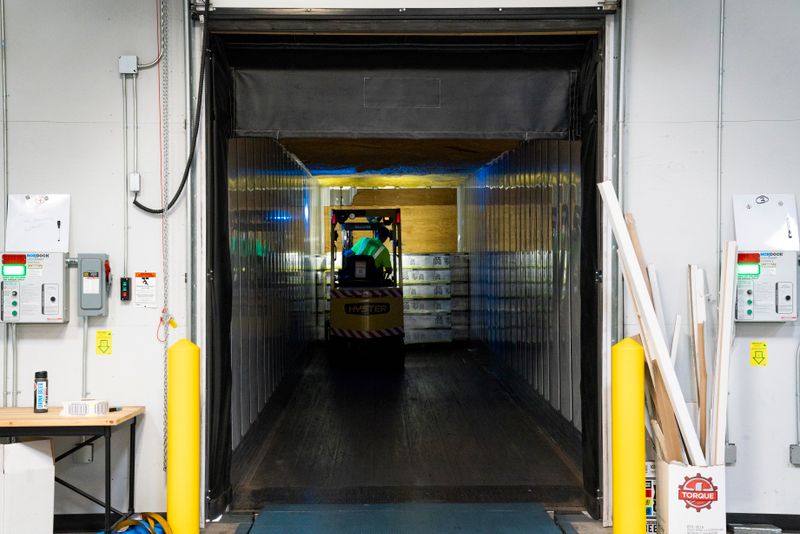
More cold is lost at the doors than through the walls in any multi-drop operation. Rear frames get three seals, and on frozen specification the frame is heated. Side doors are plug type unless the operation genuinely needs a slam door for speed.
Seals are a consumable. We say so at handover, we stock them, and we would rather sell a set of seals every two years than a relining every eight.
What we will not do
We do not patch a wet panel, we do not mount a body on a chassis outside the manufacturer's guidelines, and we do not quote a payload we have not calculated. Each of those has cost us an order. All three are cheaper than the alternative.